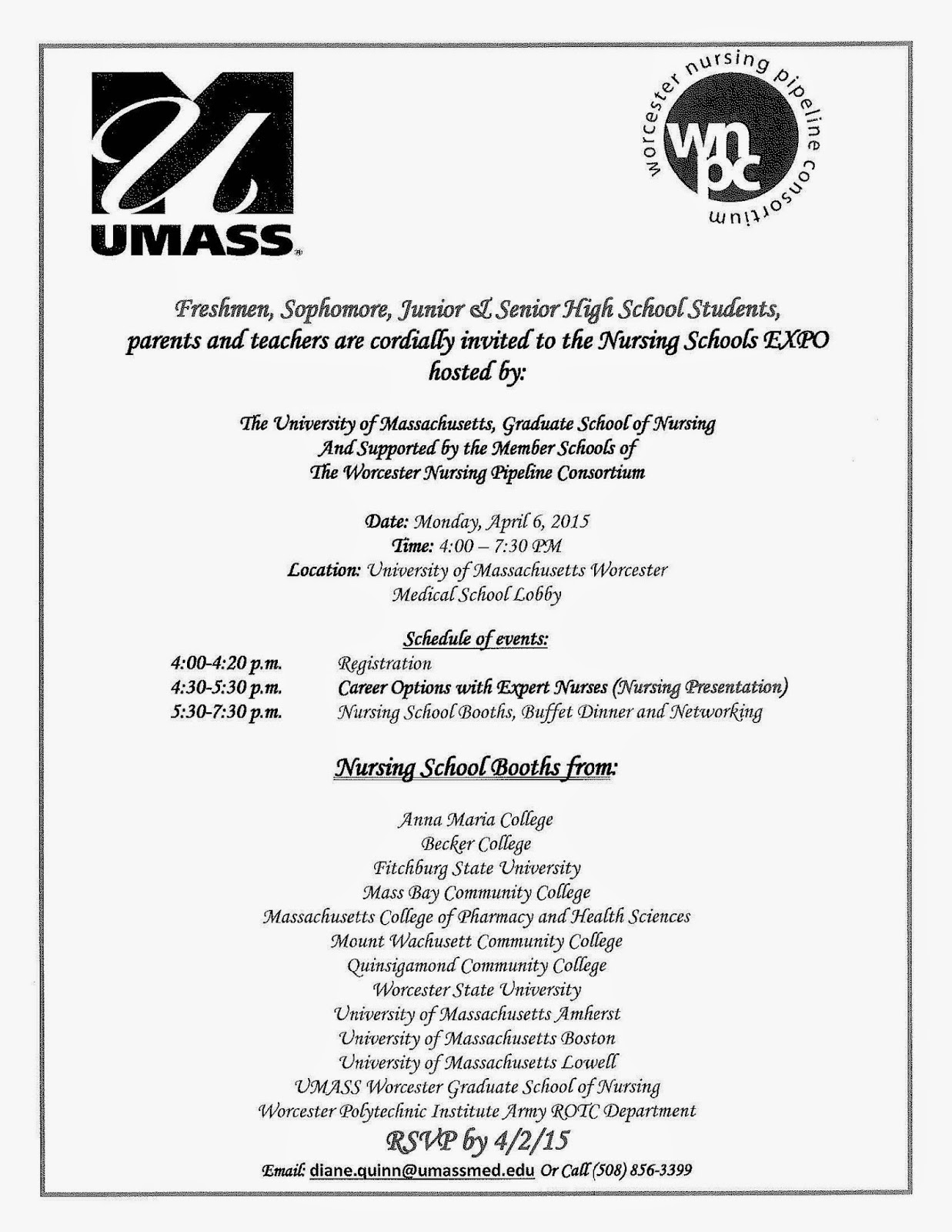
Monday, March 23, 2015

Being an Active Citizen: The Importance of Voting

Believe it or not, we are nearing the end of Term 3!  Spring is on its way (we hope!) and our seniors are thinking about graduation and life after high school.  As school counselors, we hope that we have given students the skills and tools they will need to become productive young adults and contribute to their local communities and the greater society.  One of the most important privileges that comes along with adulthood is voting.

http://www.sec.state.ma.us/ele/eleifv/howreg.htm

Why is it important for you to vote as a young adult?
  • The more young people who vote, the more politicians pay attention to issues that affect young people.  Politicians tend to be interested in people and groups who might be able to keep them in office.
  • Elections influence key issues.  Security, health care, budgets, taxes, the environment - these are all things that affect everyone, no matter their ages.
  • Democracy only works properly when everyone gets involved.  You have the right to be part of the decision making at the local, state, and federal levels - use it!  Young people in other parts of the world are fighting for this right every day.
  • If you don’t use your right to vote, you lose your right to question or be critical of the government.  Don’t like the ways things are being done?  Your vote can help to make a change.

Fifty-one percent of this year’s graduating class at Nipmuc has already reached the age of majority.  Another 25% will turn 18 before graduation.  Registering to vote is a great first step to becoming an informed and active citizen.  You can register in person or by mail.  Click here to start the process!

Friday, March 13, 2015

Challenge and Balance: Picking Classes


As you read in Ms. Fagan's post last week, spring is just around the corner. As the weather begins (and hopefully continues) to warm up, the Nipmuc counselors are starting to think about what's to come, and so are students. We've begun course registration for the juniors and sophomores, and we'll finish up with the freshman students before April break. Particularly for the upperclassmen, this is an exciting time to pick out new electives for next year and push themselves to try new classes. The full program of studies is available for students who want to review course descriptions and other information.

In our individual meetings with students, we first take a look at what graduation requirements they've fulfilled, and which ones they still need. We also talk about their college and career plans and match up what classes may help prepare them best for the future. Next, we take a look at the teacher recommendations in ipass. Students' current teachers will put recommendations for what level (CPS, Honors, or AP) they feel would be a good fit for the following year. We talk with the student to determine how they feel about these levels, and then also about what electives they'd like to take.

There are two themes that we stress when we meet with students: challenge, and balance. We want students to take challenging courses and push themselves a little harder based on their current performance and future goals. For example, if a student is some honors classes with strong grades and gets an AP recommendation, I may recommend they go for it and sign up. Progression is key - we want students to continue to challenge themselves a little more each year.

However, there also needs to be balance. Many students are involved with an enormous load of extracurriculars, work, sports, volunteering, family responsibilities, and of course, homework. Students need time to decompress, enjoy downtime with friends and family, and relax. And on top of all this, they are expected to maintain strong grades and keep up with all their courses. It's important to maintain a balance when picking rigorous classes for next year. We stress this to students in our meetings. Maintaining sanity is just as important (if not more than) academic rigor!

If you have any questions about course registration, please feel free to contact us. When students complete their course selection with us, we will also print out a course registration form for them to bring home to parents. 


Friday, March 6, 2015

Lessons from Winter

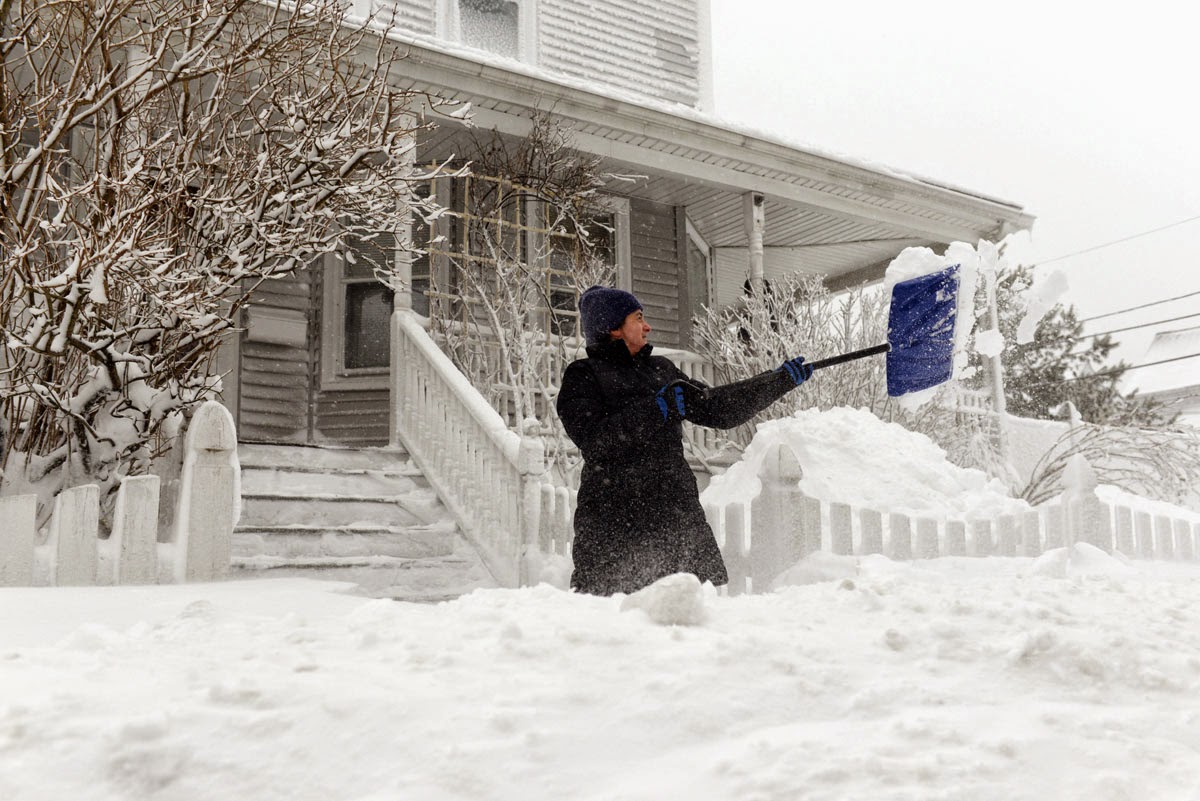
“Getting through the winter OK?”  Greetings such as these have become the norm for New England residents throughout the epic winter of 2015!  I have always thought that one of the best things about living in New England is the change of seasons.  I have enjoyed each season for all that it offers; the warmth and garden bounty of the summer; the colors and smells of the fall; holidays and beauty of a snow covered landscape in the winter and the new beginnings and growth of the spring.  There is no doubt that this record-setting winter has challenged these beliefs! Daily tasks and routines are so much more difficult with 4 feet of snow on the ground!  Even simple tasks like walking the dog and putting out the trash have required more effort, energy and time to complete. As the winter has progressed, I have noticed that my natural impulse to fight against these discomforts and inconveniences only leaves me more tired and frustrated.  Gradually, I have begun to accept the need to slow down and take extra time going about my day. 

The side benefit of slowing down is becoming more tuned into my physical environment and to my senses.  For example, I have recently noticed some early signs of spring.  I have sensed the days lengthening, the sun rising earlier in the morning and lingering later in the day.  I’ve noticed puddles and rivulets of water from melting snow signaling temperatures above the freezing mark.  Bird sounds have increased in the early morning and my dog has definitely noticed more activity from our local squirrel population.  I even smelled a skunk the other night, not normally a sensation I welcome or enjoy, but in this instance, I viewed it as another sign that the season was beginning to turn.  When walking my dog at night, temperatures have changed from 2 to 22 degrees; trust me, it makes all the difference in the world! On those same walks, I have noticed the stars brightly shining against the dark of the night sky.  I have realized that I am looking forward to spring with an enthusiasm and joy that I have not noticed in prior years.  I am imagining my crocuses beginning to stir under the soil, under the mounds of snow. I am anticipating the bloom of these and other early spring flowers, hopefully sometime this month! 

The opportunity to slow down this winter has offered me a lesson in mindfulness. I have practiced experiencing the present moment - my thoughts, emotions, and physical sensations, with curiosity and without judgment.  The research is clear about mindfulness practices (meditation, yoga, etc.) and their positive impact on stress and anxiety and it is a concept I often teach to students. When teaching Nipmuc students to be mindful, I encourage them to really tune into their senses, or their breath.  I encourage them to be mindful as they go about their daily routines, slowing down, engaging their senses and really being aware of their experience. During a recent Advisory lesson, I asked students to see, touch, hear and finally taste a raisin or Hershey’s kiss, to truly engage all of their senses in this simple activity.  Some students enjoy this type of practice, others struggle with it and that’s OK.  For myself, it took years for me to even begin to try to incorporate mindfulness practices into my daily life and this continues to be a work in progress.  As the winter winds down, I encourage all of you to try some mindfulness activities throughout your day.  One simple way is to spend some time outside in nature!  The days are slowly but surely getting warmer, so get outside, and be aware of the sights, sounds and smells that herald spring’s arrival!

For additional reading on the benefits of meditation and mindfulness, and for ways to incorporate mindful practices into your daily life, please see links below.


Thursday, February 26, 2015

College Planning for Parents of Juniors

On Tuesday, February 24th, the school counselors hosted two parent workshop sessions on the college planning process for juniors.  More than 45 parents attended the presentations to get a better idea of what is in store for their juniors.  There were a lot of questions about everything from SAT prep to teacher recommendation letters and many things in between.

For those parents who weren’t able to attend, here are some of the important “take-home” ideas:

  • It is important to start the college planning process early.
  • Students (with their parents) can start researching schools on Naviance in order to create their “colleges I’m thinking about” list in Naviance.
  • Juniors should plan to take the SAT for the first time in May or June, or the ACT in April or June.  Some students choose to take one of each test and then pursue the one they feel better about for a second round.
  • SAT or ACT preparations should start at least 7-8 weeks before the scheduled test date.  Test prep can involve taking a class, meeting with a tutor, or studying individually.
  • Students must complete the Counselor Letter of Recommendation Survey (Naviance) and parents must complete the Parent Brag Sheet (paper) by the end of this school year.
  • Throughout the spring and summer, students should research and visit schools, compile a list of schools, talk to teachers about recommendation letters, start to plan the college essay, and gather personal information for applications.
  • In the fall, there will be another parent workshop to go over the nuts and bolts of the actual application process, along with a financial aid presentation.

Below is the Prezi that the counselors followed to present all of the information. Please feel free to take a look! 

Click the image to go to the slides presented.

As always, if you have any questions or concerns, please feel free to contact your child’s counselor.  We are happy to email, talk, or meet with you in order to make the college planning process go as smoothly as possible!

Thursday, February 12, 2015

Happy February Break!


If you get a break from shoveling snow over vacation, here are some interesting articles for both students and parents.


Good family relationships: How to Raise Good Parents, by Teenagers

Relax over the break: Teens and Stress: Survival Tips

Curl up with a good book: 100 Best Ever Teen Novels


Have a great vacation!

Friday, February 6, 2015

Senioritis: An Unfortunate and Debilitating Condition

Well, it’s February and second semester is underway.  For seniors it is the last semester they will spend at Nipmuc before going off to college, work, the military, or whatever other exciting endeavors await them.  With graduation just four months away, it could be really easy to fall into the grips of a nasty case of “Senioritis.”  Senioritis is a colloquial term we use to describe loss of motivation that some students experience when they are so close to the end of high school that it feels like they already have those diplomas in their pockets.  

Here are some common signs and symptoms of Senioritis:

  • General feeling of laziness
  • Wanting to spend all time with peers
  • Declining grades
  • Dropping classes
  • Increased absences or tardies
  • Missing curfew
  • Poor hygiene
  • General apathy towards future plans
  • Use or abuse of alcohol or drugs
  • Missed assignments or activities


Does this sound like you or someone you know?  If so, it’s time to get help!  The worse you let a case of Senioritis get, the more serious the outcomes become.  Worst case scenario, your future plans of college, work, or military could be in jeopardy.  

Yes, colleges can revoke acceptances based on your performance in the second half of your senior year.  In fact, take another look at your acceptance letters.  They probably say something like, “It is important to note that this offer of admission is conditional upon you completing your current academic work in the manner that led to your admission,” or “It is understood that you will maintain satisfactory grades throughout your senior year and that you will complete all requirements for graduation.”  Almost every single acceptance letter that students at Nipmuc submitted to the School Counseling Center has a sentence like these.  

So, what can you do to avoid a scary case of Senioritis?  First and foremost, continue to put in the same amount of time to your school work that you have been in order to keep your grades up.  Remember that poor attendance in school usually has a negative effect on grades as well, so do your best to be in school for the full day every day.  Even though school is a priority, be sure to set aside some time to spend doing fun activities with friends and family.  This is a good time to embrace closeness and togetherness before you head off on your own.  Remember, too, that family time will be more meaningful if everyone is getting along, so continue to follow the rules of your home even though you’re feeling ready to be an independent adult.

If you’re sensing some Senioritis coming on and aren’t sure how well you can handle it on your own, ask for help.  See your counselor, talk to your parents, and work with your friends to motivate each other.  May 29th will be here before you know it, so make sure you’ve got a spot on that stage!

Thursday, January 29, 2015

ASVAB Career Exploration Program


Why take the ASVAB?

            Whether your post-secondary sights are set for college, a career or the military, the first step is to find out about you! The Career Exploration program offered through the United States Military allows students to engage in career exploration in both the military and civilian work domains. The ASVAB or the Armed Forces Vocational Aptitude Battery is not simply for students wishing to go onto a military career but also for those students wishing to learn more about career exploration and planning. In just three easy steps the ASVAB allows anyone looking towards the future to identify their skills and abilities, identify their own interests and finally explore over 400 occupations organized into specific career clusters.

Over 1 million students participate in taking the ASVAB each year. The test covers eight sub-sections including general science, arithmetic reasoning, word knowledge, paragraph comprehensions, mathematics knowledge, electronics information, auto and shop information and mechanical comprehension. The test measures aptitudes that are related to future careers and therefore is beneficial for any individual looking to move forward after high school. The test also identifies strengths and weaknesses of the test taker while providing a self-assessment portion. The interest inventory is based on the widely accepted John Holland’s theory and is one of the most accurate aptitude assessments on career choice.

Anyone can take the ASVAB and get their career planning started. The ASVAB is a tool to be used by any student wishing to take control of their future planning and continue their search in the world of careers. Although the ASVAB is required for entrance into the military there is no obligation to enlist once taking the test, it allows for career exploration in the civilian world for any student as well. Through a look into strengths and weakness of a student the ASVAB can also be used as a practice test for the SAT or ACT tests. This is an opportunity for any student to springboard their future career goal planning and provides a starting point to developing an effective strategy to realize possible goals through learning about oneself.

No one passes or fails the ASVAB it simply allows a way in which students can identify their strengths and weaknesses in certain areas. Obtain the scores gives many students a focus, and chance to develop these newly learned strengths and work on any weaknesses identified. The ASVAB is offered for free yearly at Nipmuc, come down to the School Counseling Center to learn more.
For more information visit www.asvabprogram.com
 

Thursday, January 8, 2015

How do we pay for college?


At this point, many students are wrapping up their college applications (and if that’s not the case for you, don’t panic! There’s still time to apply for college!). The next step for many students and families is figuring out how to pay for college and applying for financial aid. It can be an overwhelming process, but there are a few key things to know.

  • Check each college’s financial aid website to see what exactly is required to have a complete financial aid application. All colleges will require the FAFSA form, some will require the CSS profile, and some may require an additional college-specific form. You’ll also want to check the financial aid application deadline. Many schools have a deadline of February 15, but some schools vary.
  • What is the FAFSA? Every college or university requires the FAFSA form (Free Application for Federal Student Aid) to be submitted in order to award any type of need-based aid. Need-based aid is based on your answers about your family’s income, assets, number of students already in college, and several other factors. Parents will be able to answer these questions on the FAFSA using their tax return. The FAFSA is available starting January 1, so families can fill it out now!
  • What is the CSSProfile? Some schools (but not all) require the CSS Profile (College Scholarship Service Profile), which can be found on the CollegeBoard website. This profile asks for more specific information than the FAFSA. If you applied early action to any schools, they may have already required you to submit the CSS Profile.
  • Parents will often ask how they can fill out the FAFSA if their taxes aren’t done yet this year. Financial aid advisors recommend that you fill it out as best as you can using last year’s tax return, or using estimates, and then log back in to update it once the new tax return comes through.

Resources: There are a number of resources out there regarding financial aid. Two very good ones are MEFA.org, and FAFSAday.org.   

  • MEFA is the Massachusetts Educational Financing Authority, which walks families through all the ins and outs of applying for financial aid, comparing financial aid packages, and even applying for educational loans.  
  • FAFSA Day is on January 25 at 1:00pm this year. It's a "non-profit, volunteer driven program providing free assistance to students and families seeking to complete the FAFSA." Students and parents can bring their financial information and get help filling out the FAFSA right then and there. It's conveniently located right across the street at BVT.
      • Where?     Blackstone Valley Tech
65 Pleasant St
Upton, MA 01568
      • When? January 25, 2015 at 1:00 PM
      • Site Coordinator(s):
        • Elizabeth Hennessy, 508 529-7758 x3009
        • Kurtis Johnson, 508-529-7758 x3152

Thursday, December 11, 2014

Breakfast with the Counselors: Understanding our Sophomores.

Breakfast with the Counselors: Understanding our Sophomores.
Nipmuc School Counseling Center welcomed sophomore parents to “ Breakfast with the Counselors-Supporting Healthy Decisions.”  The School Counselors were joined by Kristen Birch, Clinical Coordinator of You Inc’s Day Treatment services as a guest speaker. We would like to thank Kristen and all the parents who participated in this event. Here are some highlights from our workshop.
Sophomore year poses many academic and social challenges for students of this age.  Parents and counselors highlighted numerous changes that occur as students transition between freshmen and sophomore year. Parents expressed feeling challenged as their students experienced more stress, faced more academic challenges, and on the home front, pushed boundaries, expressed more defiance, or exhibited more solitary or isolated behavior. Counselors noted that some of these challenges occur because of age appropriate drives towards autonomy and independence, but agreed that parent-child dynamics saw considerable changes.     
Sophomore year is an “in-between” year. Sophomores gain less attention than the freshmen, juniors and seniors who are experiencing major milestones and transitions, and yet so much growth and development happens during sophomore year.  Sophomores are just beginning to discover themselves as they start to drive, work outside the home and experience an expanded social world beyond their neighborhood or school. There is also a leap in intensity within the academic realm for sophomores and it is a high stakes testing year, which may add more stress and anxiety.  For parents,  counselors, and teachers, it is a major goal to support positive and healthy choices during this time.
Kristen Birch, our guest speaker, who works with substance abusing youth and their families at You Inc., discussed some of the changes that occur in teenagers at this time in their life, and provided some insights on how to foster positive choices for our students. One important factor to remember during this time is teenage brain development. Teenagers are largely driven by their amygdala, the emotional center of their brain, whereas their pre- frontal cortex, the “executive” branch of the brain,  is not yet fully developed. Teenagers experience intense emotions, but the part of their brain that helps them to manage impulses and problem solve is not yet working effectively. Of course, this is all happening at a  time that teenagers are looking more towards their peer group for affirmation and validation, and are distancing more from parents and caregivers.  
Keeping this in mind, counselors and parents discussed changes in parenting styles. Many parents talked about reflecting more on their parenting style and interactions with their teens to help cope with the changing dynamics within their household. Parents recognized the need to problem-solve less for their teens and listen more, as their teens pushed for more independence and  autonomy.  Parents and counselors discussed having  open conversations with teens in regards to the decisions they make, and allowing them to make their own choices based on these discussions. Parents were encouraged to embrace the idea of “planting the seed” with their teens and giving their teens time to process advice or ideas and make it their own. Parents and counselors acknowledged this was not always easy to do, but that fostering communication and connection was essential.  Effective communication between parents and kids, while not always easy, creates a bridge between adults and children and can open the door to successful choices.
Our guest presenter offered a final analogy, that parenting teens is like bowling with the bumpers up. You launch the ball, and the bumpers keep it heading down the line, it might go off course a bit, and the line is not always straight, but the bumpers are there to help that ball get to the end goal.
Follow the link to find the documents provided at the breakfast:
https://docs.google.com/a/mursd.org/file/d/0B16edQSQ2ZefYkc4NTM1R09RbG8/edit


If you could not make our breakfast feel free to contact the Nipmuc School Counseling Center with any questions or concerns. We also invite parents to send us ideas for future workshops.